AI digest — Oct 30, 2026
Top line: Google's Project Suncatcher satellite boots its TPUs in orbit and sends its first machine-written response back to Earth, Gemini 4 Carbon makes its Arena debut at #1 in Text and #2 in Agent, and Neuralink published the details of a 72-hour hackathon at an ALS trial participant's home alongside Musk's restated Telepathy and Blindsight plans. The Wikimedia Foundation asked a federal court to weigh in on the AI copyright cases — backing training, not regurgitation — and OpenAI said it will honor a shared robots.txt signal letting websites express AI training preferences. Pope Leo XIV called on UN member states to take "concrete steps toward banning lethal autonomous weapons," while Anthropic's S-1 drew its first full reads (an investor letter asking believers to bet on an "age of miracles," plus a diseconomies-of-scale critique), the data-center backlash flared in Maine's Senate race, and Anthropic renamed its Max plans and lifted the 5-hour cap on verified Ultra accounts.
- Gemini 4 Carbon debuts #1 in Text Arena and #2 in Agent Arena
- Neuralink details a 72-hour hackathon that let an ALS participant speak and call by thought; Musk restates Telepathy and Blindsight plans
- Wikimedia Foundation moves to weigh in on the landmark AI copyright cases: protect training, not regurgitation
- Maine Senate race turns the data-center backlash into a control-of-the-Senate question
- Pope Leo calls for the "disarmament" of AI, urging a ban on lethal autonomous weapons
- Anthropic's S-1 investor letter asks believers to bet on "an age of miracles" — and analysts find diseconomies of scale inside
- Google's Project Suncatcher satellite boots its TPUs in orbit and sends its first response to Earth
Gemini 4 Carbon debuts #1 in Text Arena and #2 in Agent Arena
What happened: Google DeepMind's Gemini 4 Carbon made its first appearance on Arena's boards, and Demis Hassabis amplified the results (Arena.ai via Hassabis on X). It enters at #1 in Text Arena (1,528 points, ahead of Gemini 4 Argon at 1,520) and #2 in Agent Arena with a +16.2% net improvement across roughly 21,900 real-world agentic sessions from Arena's community — placed ahead of GPT-6 Astra and Claude Fable 5.1. Agent Arena reports a $1.80 median cost per task, 72% less than the board's #1, Claude Opus 5.5 (Max). In Code Arena: WebDev it scores #4 (1,768 points, two behind Claude Sonnet 5.5 xHigh, 89 ahead of Gemini 4 Argon). Standout signals: #1 in steerability (+18.6%) and #3 in confirmed user success (+18.7%). Hassabis restated the positioning: Carbon is "state-of-the-art across cybersecurity and long-horizon capabilities." And a first distributor signed on: Perplexity's CEO shares early evals calling Carbon the strongest model yet seen for long-form research and answer quality, with a claimed state-of-the-art score on the Wide-And-Deep-Research (WANDR) benchmark, and says Carbon is coming soon to all Perplexity Pro and Max users inside Perplexity Computer (Arav Srinivas on X).
What's genuinely new: the first independent board placements for Carbon, which until now had only closed-benchmark claims (an Artificial Analysis v5.0 index score of 59) and gated Fairwind access for a subset of cyber defenders. Session-level agent results and a cost-per-task comparison against Opus 5.5 (Max) are new specifics, and the first named distribution commitment lands alongside them — Perplexity says its Pro and Max users will get Carbon inside Computer once token capacity allows. One caveat: the numbers arrive through Carbon's own team's amplification of Arena's post — no independent writeup of the board results yet.
Watch: whether access widens beyond Fairwind; whether broader independent testing reproduces the #1 placements; any API or pricing availability announcement; and when the Perplexity Computer rollout actually reaches users.
Links: Demis Hassabis on X · Arav Srinivas on X · Oct 30, 4:19 PM ET
Neuralink details a 72-hour hackathon that let an ALS participant speak and call by thought; Musk restates Telepathy and Blindsight plans
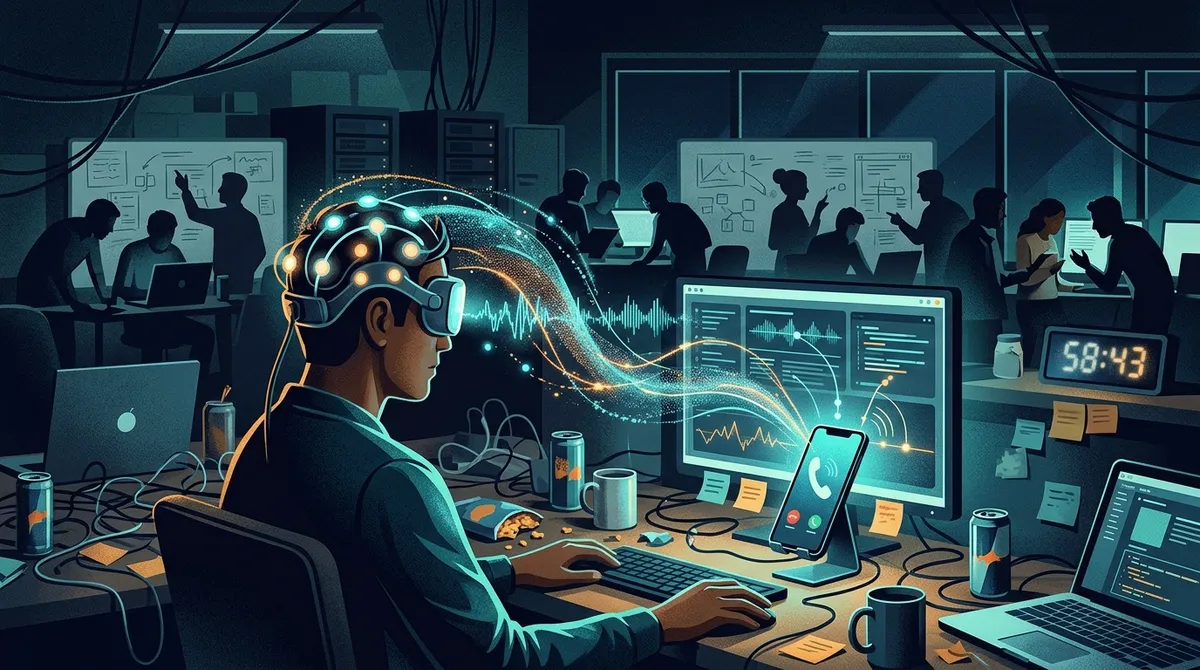
What happened: Neuralink's blog update (amplified by Musk on X) describes engineers spending 72 hours at the home of a speech-restoration (VOICE) trial participant, building and testing improvements alongside him — features for speaking, making calls, and using Grok by thought. The participant, Kenneth Shock, writes that he and his wife "joked on the phone again." In adjacent posts (Musk on X, Musk on X) Musk restates the product lines: the first product, Telepathy, enables "high-speed communication with computers or humans simply by thinking," with output bandwidth claimed to vastly exceed the fastest human speech or typing in a few years; the second, Blindsight, he calls "ready from an engineering standpoint. Just waiting on regulatory approval."
What's genuinely new: the hackathon specifics — features prototyped in a participant's own home over 72 hours — appear in a company post for the first time, and Musk's Blindsight status claim (engineering-complete, regulatory pending) is a concrete, checkable statement about an implant meant to restore vision to people who have never seen. Coverage so far runs through the company and Musk; no independent report yet.
Watch: independent or clinical reporting on the VOICE trial participant results; any regulatory filing or approval movement on Blindsight; Telepathy usage data or a bandwidth demonstration.
Links: Elon Musk on X · Elon Musk on X · Elon Musk on X · Oct 30, 12:06 AM ET
Wikimedia Foundation moves to weigh in on the landmark AI copyright cases: protect training, not regurgitation
What happened: The Wikimedia Foundation, the nonprofit behind Wikipedia, has asked a federal court for permission to file a friend-of-the-court brief in the set of landmark AI copyright lawsuits pitting publishers against OpenAI (Unite.ai, The Verge). The Foundation announced the move on October 30, 2026. In the brief it stakes out a middle ground: courts should legally protect large language models training on copyrighted work — but not chatbots that regurgitate that work back to users. An overly black-and-white ruling, it says, could either deprive Wikipedians of useful AI-based tools or endanger the open web.
What's genuinely new: a formal legal position from Wikipedia's operator in the training-copyright lawsuits — the training-versus-regurgitation split is the Foundation's own framing, not a litigant's argument relayed, and it arrives with a dated court filing (October 30). The nonprofit had previously gone public about AI agents accessing its platforms; now it is entering the copyright question on the side that favors protecting training.
Watch: whether the court grants leave to file, the brief's full argument once it is docketed, and whether other platform operators follow with their own briefs.
Links: The Verge · Unite.ai · Oct 30, 5:00 AM ET
Maine Senate race turns the data-center backlash into a control-of-the-Senate question
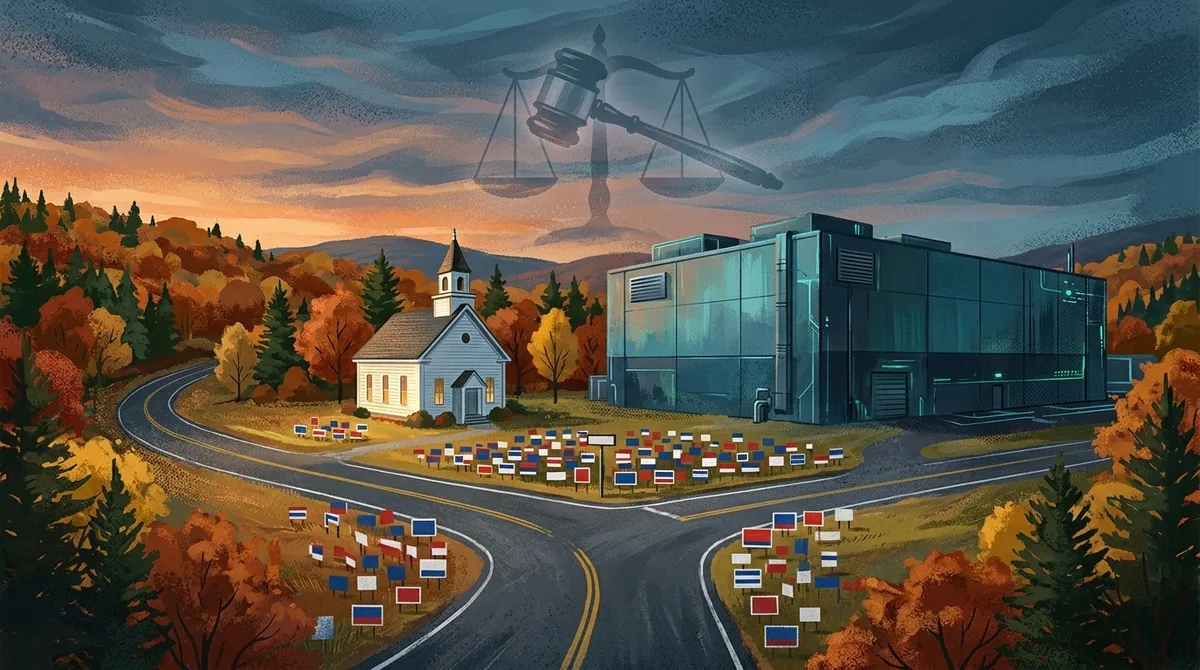
What happened: In the closing days of the 2026 midterm campaign, the data-center backlash surfaced on Maine's biggest political stage (The Verge). During the final debate of the midterms, an audience member cut off Sen. Susan Collins midway through her defense of her record, shouting: "I'm terrified. AI data centers are destroying our climate. They are poisoning our water." Collins brushed off the outburst, tying the man to her Democratic challenger, Troy Jackson. The Verge frames the race outright as one whose outcome could decide which party controls the Senate.
What's genuinely new: the race-level politics of data centers, which surfaced across many congressional and gubernatorial contests in October's coverage, now has a named, highest-stakes instance — a Senate seat being fought with the issue live in the room, with the outlet tying the backlash directly to chamber control.
Watch: the Maine result and whether the data-center question features in either candidate's final pitch; whether other Senate-level races pick up the same frame; whether the winner's posture changes how data-center siting is treated.
Links: The Verge · Oct 30, 7:00 AM ET
Pope Leo calls for the "disarmament" of AI, urging a ban on lethal autonomous weapons
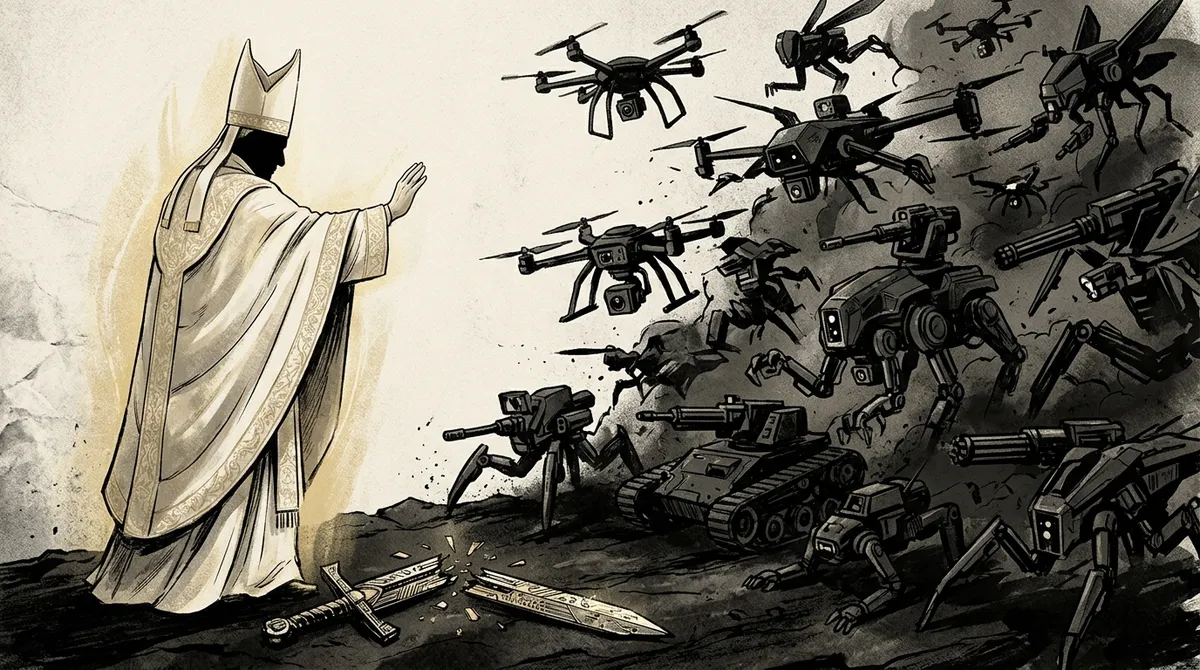
Thread: ai — Pope Leo's AI disarmament call: UN states urged toward a ban on lethal autonomous weapons · new
What happened: Pope Leo XIV says AI systems should be "disarmed," adding that humans "have the responsibility to guide, change and, when necessary, reject its applications" (The Verge). In the papal address delivered October 30, 2026, he encourages United Nations member states to "take concrete steps toward banning lethal autonomous weapons" during their meeting in Geneva next month. The address reflects ideas Leo set out in his first major papal document in May on safeguarding the human person in the age of AI.
What's genuinely new: the Vatican's leader explicitly framing AI as something to be disarmed — and putting a concrete, dated ask on the table: a ban on lethal autonomous weapons, pitched directly at UN member states ahead of the Geneva meeting. The address lands amid the broader international debate over autonomous weapons and AI governance; no UN response yet.
Watch: the Geneva meeting's response; whether any member state moves toward ban text; whether other religious or institutional leaders pick up the "disarmament" framing for AI.
Links: The Verge · Oct 30, 10:58 AM ET
Anthropic's S-1 investor letter asks believers to bet on "an age of miracles" — and analysts find diseconomies of scale inside
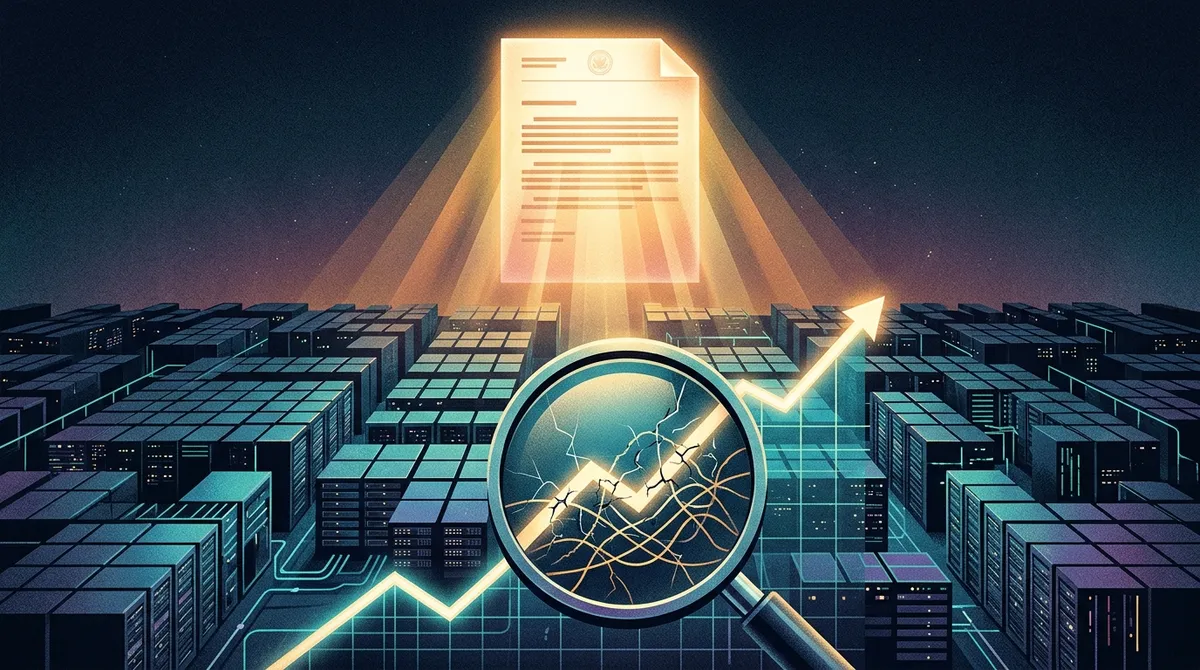
What happened: The first full reads of Anthropic's filed S-1 are out. The Verge digs into the letter at the top of the 335-page prospectus: to invest, the letter suggests, you have to believe — best case AI "bring[s] forth an age of miracles," worst case it could "pose catastrophic or existential risks to humanity." The piece frames that framing as part of a steady hype escalation in Silicon Valley. SiliconAngle reads the same risk-factor stack from a different angle, flagging a "diseconomies of scale" economic argument as a hidden threat in the prospectus — alongside the filing's recap of existential-harm language and the possibility that AI will blackmail people.
What's genuinely new: the S-1 itself was announced October 26; what arrives now is the investor-facing letter's own wording — a company-confirmed bet on miracles against catastrophe as the pitch to shareholders — and the first economic critique of the filing, arguing the prospectus's risk disclosures treat scale itself as a threat. Both reads quote the document directly rather than relaying the September wire preview.
Watch: prospectus contents against the $1.5–2 trillion valuation range and the "as soon as next month" Nasdaq timing carried by the October 29 SemiAnalysis read; whether the believe-in-miracles framing draws press or regulator scrutiny; effective date and final pricing.
Links: The Verge · SiliconAngle · Oct 30, 9:11 AM ET
Google's Project Suncatcher satellite boots its TPUs in orbit and sends its first response to Earth

What happened: Google's Project Suncatcher prototype — the TPU-equipped satellite that rode SpaceX's Transporter-18 rideshare into orbit on October 1 — has produced its first result from space (The Verge). In a company blog post, Google says it successfully booted the satellite's Tensor Processing Units, letting the on-board Gemma 4 model answer a prompt to write a haiku about being in space — "Blue marble below / Data streams in silent grace / Starlight feeds my core. ✨" — with space-themed limericks and telemetry prompts tried as well.
What's genuinely new: the first on-orbit TPU boot and first machine-written response transmitted back from Google's orbital-compute prototype — the checkable step beyond the October 1 launch, moving from "the hardware is in orbit" to "the accelerators run and answer." The output is a demo haiku, but it rests on concrete hardware facts: TPU boot and on-board model inference in space.
Watch: the radiation-tolerance and qualification data the prototype flight was meant to gather; the Suncatcher plan's second prototype (Google's published roadmap calls for two prototypes with Planet by early 2027); and whether rival orbital-compute payloads return their own on-orbit results.
Links: The Verge · Oct 30, 2:21 PM ET
Brief
- Terafab: Musk on X says "The Terafab project is going well," amplifying a post citing Korea's The Elec in which a Korean supplier executive describes unusually fast decision-making by the chip project's engineers — answers even to questions sent during US early-morning hours.
- Grok 4.8: Musk on X says the next model has taken longer than expected but "will not be a disappointment," adding that xAI is not optimizing for benchmarks and it will be "incredibly useful."
- Mistral: Mistral AI on X releases the weights of "a new and improved Le Chonk," a cybersecurity- and agentic-coding-focused open-weights update claimed #1 among open models on Cognition's FrontierCode; Kilo, the desktop coding app acquired by Anaconda, says it supports the release the same day. A companion post amplifies Mistral researcher Sagar Vaze's argument (Mistral AI on X) that the most serious recent AI cyberattacks came from jailbroken or sandbox-escaped closed models rather than open weights, and that defenders denied frontier-API access fall back on open-weights models. Vendor claims; no independent report yet.
- Mistral Large 4, "Le Chonk" — see above — is itself a development of the efficient-tier thread's earlier model-line reporting.
- Samaya AI: MarkTechPost covers the release of Sterling, a finance research agent model with 3B active parameters post-trained from a Nemotron base, claimed at 58.9% on the FrontierFinance benchmark above Claude Fable 5.1 at roughly 11x lower cost — a self-scored vendor benchmark, with no independent evaluation in the coverage.
- A best-paper award work on inference efficiency: MSN carries a report that AWS and Booking.com combined knowledge distillation with the Medusa decoding technique to run a 70B model roughly 20x faster, winning an ACL best-paper award — the syndicated copy does not name the original outlet, so the details are unverified.
- Claude Code rule change: steipete on X amplifies a report that Claude Code picked up a new rule around October 27, pushed from Anthropic's servers under a flag called "tengu_heron_brook" with no setting to turn it off, restricting video-game rewrite claims ("Do build original games, games in a genre..."). A single-source platform-side behavior change affecting users of the tool; unconfirmed so far.
- Claude plans renamed: Claude on X says Anthropic is renaming Max 5x to Max and Max 20x to Ultra on October 30, with prices unchanged ($100 and $200 a month), and is removing the 5-hour limit for verified Ultra accounts starting the same day — newer accounts keep a temporary limit until verified, and weekly limits are unchanged. Vendor post; no independent writeup yet.
- OpenAI Private Intelligence: OpenAI on X announces stricter data controls for businesses using its most capable models on sensitive work (OpenAI). Vendor announcement; no independent report yet.
- OpenAI training opt-outs: OpenAI says it will honor a shared robots.txt signal that lets website operators communicate their AI training preferences to participating providers — a technical, standards-shaped complement to the same-day Wikimedia amicus move in the copyright cases. Vendor announcement; no independent writeup yet.
- ChatGPT teen protections: OpenAI says it is strengthening violence prevention in ChatGPT with expanded safeguards, earlier interventions, and a new commitment to public safety reporting. Company post; no independent evaluation yet.
- Starbucks drive-thru: The Verge covers CEO Brian Niccol's plan, laid out on an earnings call, to explore "experiences that recognize participating customers as they arrive, present personalized digital menus, and make payment more effortless" — an exploration in the same direction as Taco Bell's, not a deployment.
- Rivian: CMSWire relays the Rivian CEO's argument that robotics is progressing much faster than commonly assumed, with transformer technology like that behind chatbots now powering robots on the company's factory floor — executive commentary, no dated deployment specifics.
- JEPA theory: LeCun on X amplifies Randall Balestriero's claim that the Platonic Representation Hypothesis is "now a Theorem" — separately trained JEPAs provably learn the same representation up to a rotation, with a 109M-parameter JEPA-Text model aligning with vision models better than 72B LLMs. A researcher claim on X; the paper itself is not linked.
- Perplexity Computer in your Chrome: Arav Srinivas on X announces a new Chrome extension that lets Perplexity Computer's Mac and Windows apps drive the user's own browser, working with sites the user is already signed into; live for all Computer users. Vendor post; no independent report yet.
- GEO for PR: PR Daily covers the fourth edition of Muck Rack's "What is AI Reading?" report, with new data on how AI engines treat paid versus earned media — a trade-report read, no independent check in the coverage.
- Altman on the math flood: The Verge reports Sam Altman sympathizing with mathematicians absorbing a stream of AI-generated results but saying the onslaught won't stop, and hinting there could be much more to come from OpenAI's stockpile of discoveries.
- Claude open platform: OpenCode, amplified by nichochar on X says Claude subscriptions can now be used inside OpenCode — a third-party adoption datapoint for the subscription-in-other-tooling opening.