Space digest — Nov 14, 2026
Top line: SpaceX's Ship 42 caught its Starship upper stage at Starbase on November 14, the first Ship catch, after deploying 26 Starlink V3 satellites. The booster was lost to a guidance fault the day before. Rocket Lab's 100th Electron flew the same weekend, and ULA's Vulcan slipped again to November 15.
- ULA's Vulcan slips to November 15 on a second launch-day problem
- Starship Flight 15: booster catch aborted, first upper-stage catch attempt due November 14
- Rocket Lab's 100th Electron launch: iQPS radar satellite away
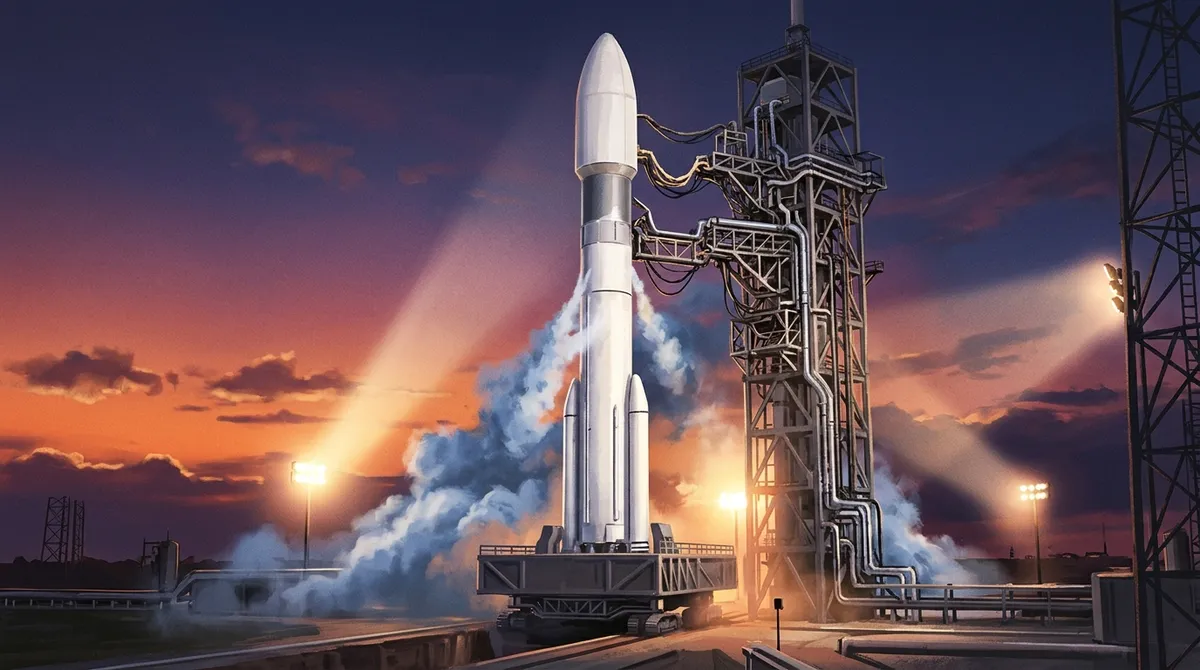
ULA's Vulcan slips to November 15 on a second launch-day problem
Sources ULA statement via Jeff Foust on X Orlando Sentinel published Nov 14, 8:59 AM ET
What happened: United Launch Alliance's Vulcan rocket missed a second straight launch chance on the return-to-flight attempt for the Amazon Leo 1 mission, after a network communication issue between ground equipment and the launch vehicle threatened to extend the hold beyond the 29-minute window (ULA statement via Jeff Foust on X). The next try is set for November 15 at 12:11:30 p.m. EST from Cape Canaveral Space Force Station, pending range approval, with the vehicle and spacecraft healthy.
What's genuinely new: The November 13 attempt was scrubbed by a power interruption that knocked out the high-pressure pumps at the Air Liquide gaseous-nitrogen plant serving the pad, one day after the rocket was rolled out (Orlando Sentinel). This flight — Vulcan's fifth — is the first on the six-booster VC6L configuration and the first of 38 Vulcan missions Amazon bought to lift its Leo satellite constellation; Amazon had launched only 398 Leo satellites as of the report. Vulcan has been grounded since a booster-nozzle failure on its February national-security flight.
Watch: The November 15 attempt, whether Vulcan's return opens ULA's launch cadence again, and when the Space Force clears national-security payloads — the missions have meanwhile flowed to SpaceX's Falcon rockets as SpaceX winds that fleet down.
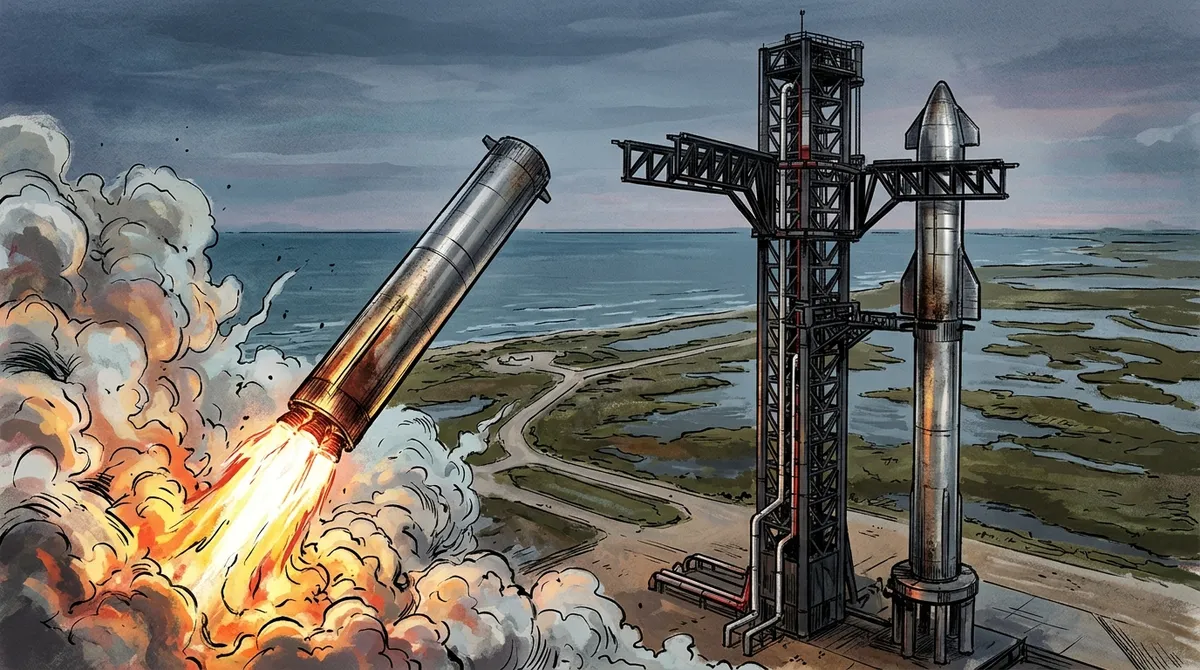
Starship Flight 15: booster catch aborted, first upper-stage catch attempt due November 14
Sources 24/7 Wall St. USA Today Reuters via MSN Spaceflight Now SpaceX NBC News CNN NASASpaceflight on X Engadget CNBC New York Times
What happened: SpaceX's Ship 42 was caught by the launch tower's mechanical arms at Starbase, Texas, on November 14, after about 22 hours in orbit. It was the first time a Starship upper stage was caught, and it followed Flight 15's launch on November 13, which deployed all 26 Starlink V3 satellites. The Super Heavy booster had aborted its return over a guidance, navigation and control (GNC) issue and was lost in the Gulf of Mexico (SpaceX; NBC News).
What's genuinely new: The upper-stage catch worked, though the booster was not recovered, so no full vehicle has yet been caught. Elon Musk said the booster was "slightly low on fuel," which fits the oxygen-rich green flash seen at the end of its burn (NASASpaceflight on X). CNN reports the mission ran 22 hours 33 minutes, Starship's longest flight, and that SpaceX opened its Starfactory to journalists (CNN). NBC News reports SpaceX has put at least $15 billion of its own funds into Starship.
Watch: The booster's GNC investigation, and the first Starship launch from Florida at Kennedy Space Center, which SpaceX says its new pad there can support later this month (NBC News).
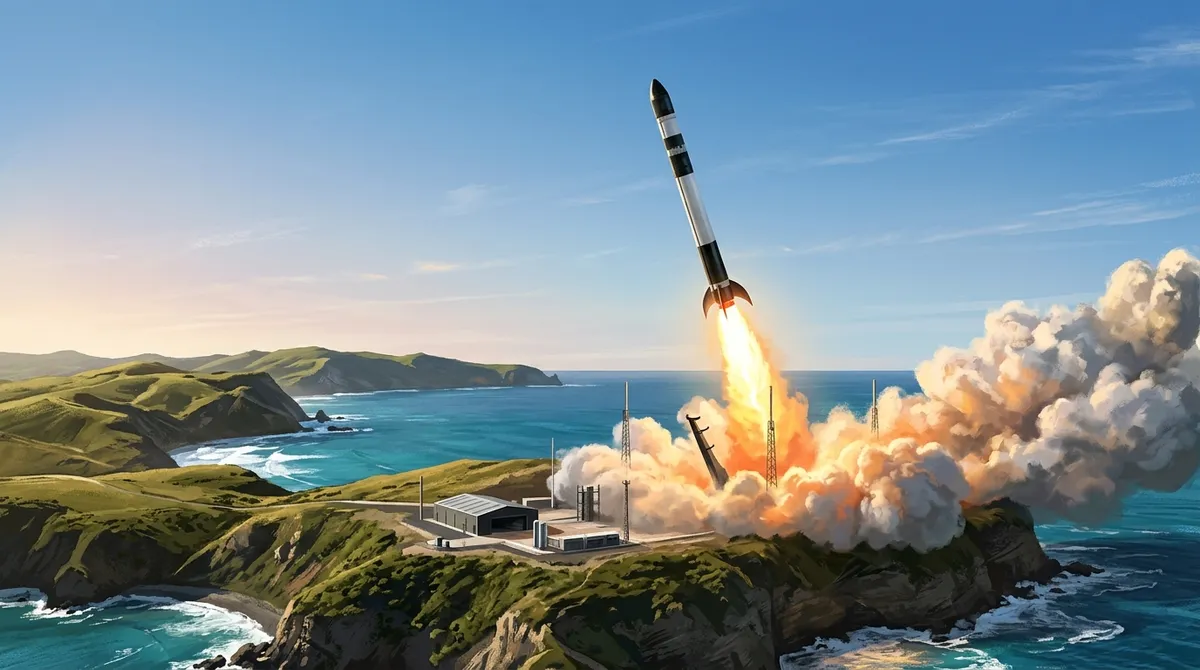
Rocket Lab's 100th Electron launch: iQPS radar satellite away
Sources Business Insider Around Prague Shattered Starlust SpaceNews
What happened: Rocket Lab's 100th Electron launch, "The Mountain God Rises," lifted off from Launch Complex 1 on New Zealand's Māhia Peninsula on November 14, carrying iQPS's YAMATSUMI-II radar Earth-imaging satellite to a 575-kilometer low Earth orbit, deployed by the rocket's kick stage. iQPS reported contact with the spacecraft about eight minutes after deployment. Rocket Lab counts it the 11th Electron launch for the Japanese customer.
What's genuinely new: The flight succeeded, and Rocket Lab says no other commercially developed rocket reached 100 launches faster — wording that sets aside government-built vehicles (Starlust). CEO Peter Beck called 100 "just the start," citing more than 55 Rocket Lab spacecraft in development and over $1 billion worth of launches booked across Electron, HASTE and Neutron; the 100 flights have carried more than 270 payloads. iQPS confirmed YAMATSUMI-II's stowed antenna deployed, with the satellite in commissioning toward its first images (Starlust); SpaceNews confirms the milestone flight.
Watch: iQPS's commissioning campaign — calibration and first images before the radar satellite starts revenue work — and whether the eight further dedicated iQPS launches booked through 2030 convert to flights.
Brief
- SpaceX's first Florida launch preparation is advancing: the launch tower at Kennedy Space Center's Pad 39A will be ready to support a Starship launch later this month, and Gigabay there is ready to receive its first Super Heavy booster, with the first Cape launch "in the very near future" (USA Today).
- NPR's morning-after flight report adds an interview angle beyond the launch: SpaceX president Gwynne Shotwell suggested NASA astronauts ride Boeing's Starliner capsule as Falcon 9 retires — Falcon 9 is the only US vehicle now carrying crews to the station, with launches booked through 2028 against crew staying to 2030 (KSMU Radio).