Space digest — Nov 23, 2026
Top line: Arianespace has cleared a November 24 retry for the 36-satellite Amazon Leo launch scrubbed on November 23 by ground-systems trouble, with separation about two hours after liftoff. BepiColombo is confirmed in a stable Mercury orbit after a software issue cut its arrival burn short, with the two orbiters set to part on December 9. Rocket Lab's Electron book keeps filling as Falcon 9 rideshares close — Synspective signed 20 more launches.
- China publishes its most detailed roadmap yet for a crewed Moon landing before 2030
- BepiColombo confirmed in stable Mercury orbit despite the shortened arrival burn
- Booster 24 enters full cryo testing as Flight 17 shapes up — possibly Starship's first launch from Florida
- Arianespace holds the Ariane 6 launch of 36 Amazon Leo satellites — retry set for November 24
- Rocket Lab expects an Electron price rise as the Falcon 9 order book closes
China publishes its most detailed roadmap yet for a crewed Moon landing before 2030
Sources NASASpaceflight Arab News Pakistan published Nov 22, 5:31 PM ET
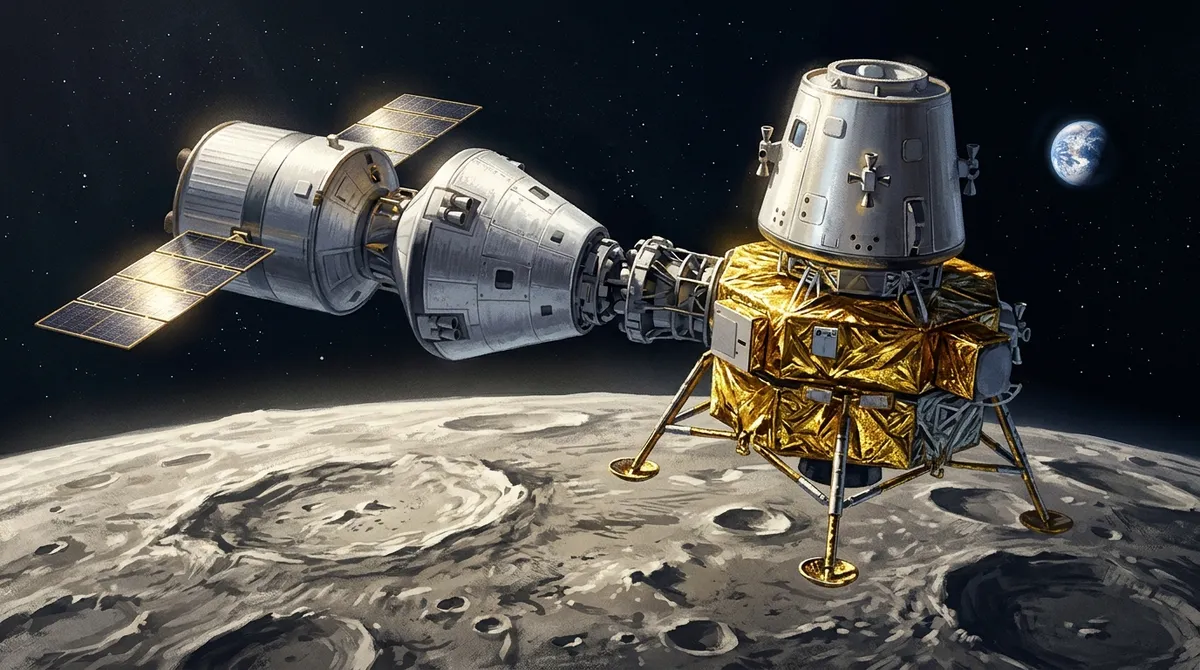
What happened: China has laid out its most detailed sequencing yet for landing astronauts on the Moon before 2030: three uncrewed Mengzhou missions precede the first crewed landing attempt, built on a two-launch profile in which the Lanyue lander waits in lunar orbit to dock with the Mengzhou crew ship. Two crewmembers would spend about three days on the surface with possible daily spacewalks while a third stays aboard Mengzhou.
What's genuinely new: The plan, presented by Lunar Exploration Project chief designer Wang Xiang at the 7th Manned Space Symposium in Beijing, dates the steps: Mengzhou-1, an uncrewed flight to the Tiangong station on the reusable-first-stage Long March 10A, has slipped to early 2027; an uncrewed Lanyue lander demonstration on a full Long March 10 follows likely in 2028; and a full robotic dress rehearsal using two Long March 10 launches is expected around 2029 — possibly timed to the People's Republic's 80th anniversary year. Unlike Apollo or Artemis, China's first crewed lunar mission goes straight to a landing, leaning on the Chang'e program's already-proven autonomous ascent and lunar-orbit docking.
Watch: Mengzhou-1's early-2027 date, the 2028 lander demonstration, and the Tiangong rotation this month carrying China's first foreign visitor, one of two Pakistani candidates.
More context: Pakistan's first astronaut, one of two shortlisted pilots — Muhammad Zeeshan Ali and Khurram Daud — is to fly on Shenzhou-24 and spend about a week aboard Tiangong as the station's first foreign visitor, though Chinese authorities had yet to announce a confirmed launch date, Arab News Pakistan reports.
BepiColombo confirmed in stable Mercury orbit despite the shortened arrival burn
Sources ESA BepiColombo on X published Nov 23, 12:44 PM ET
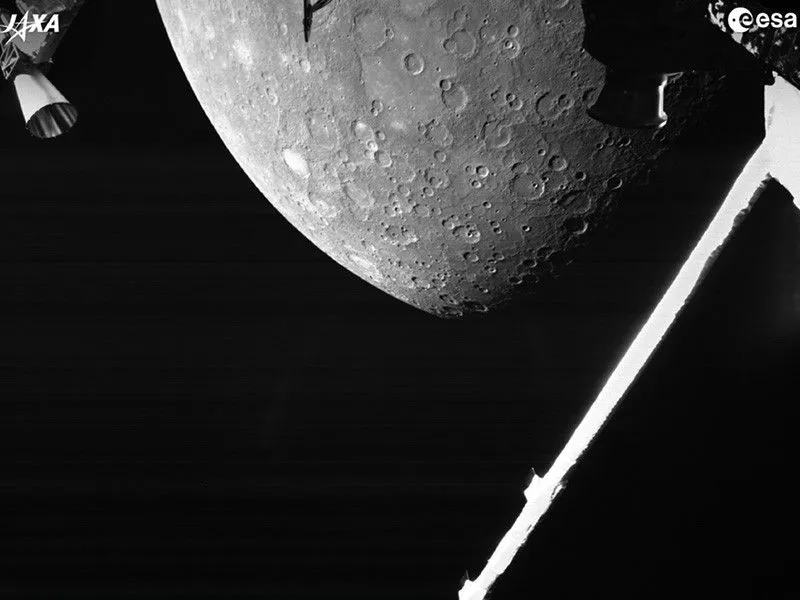
What happened: ESA has confirmed BepiColombo is in a stable orbit around Mercury despite a thruster burn that ended shorter than planned during the November 21 arrival manoeuvre. The burn was cut short by a software issue relating to thruster control, the agency said, with the spacecraft safe and ESOC teams working to understand what happened — and the mission remains on track to separate the JAXA MMO and ESA Bepi orbiters on December 9.
What's genuinely new: The cause is now named and the consequence bounded: ESA had said only that the spacecraft was safe and teams were assessing, with updates promised. The software explanation and stable-orbit confirmation close out two days of silence, and the December 9 separation date fixes the mission's next gate after eight years of interplanetary travel to reach Mercury's orbit.
Watch: what ESOC's assessment says about the thruster-control software and the spacecraft's health, the December 9 orbiter separation, and the start of science around Mercury.
Booster 24 enters full cryo testing as Flight 17 shapes up — possibly Starship's first launch from Florida
Sources Elisar Priel on X NASASpaceflight on X BASENOR BASENOR, link 2 NASASpaceflight's video on YouTube NASASpaceflight published Nov 23, 7:58 AM ET
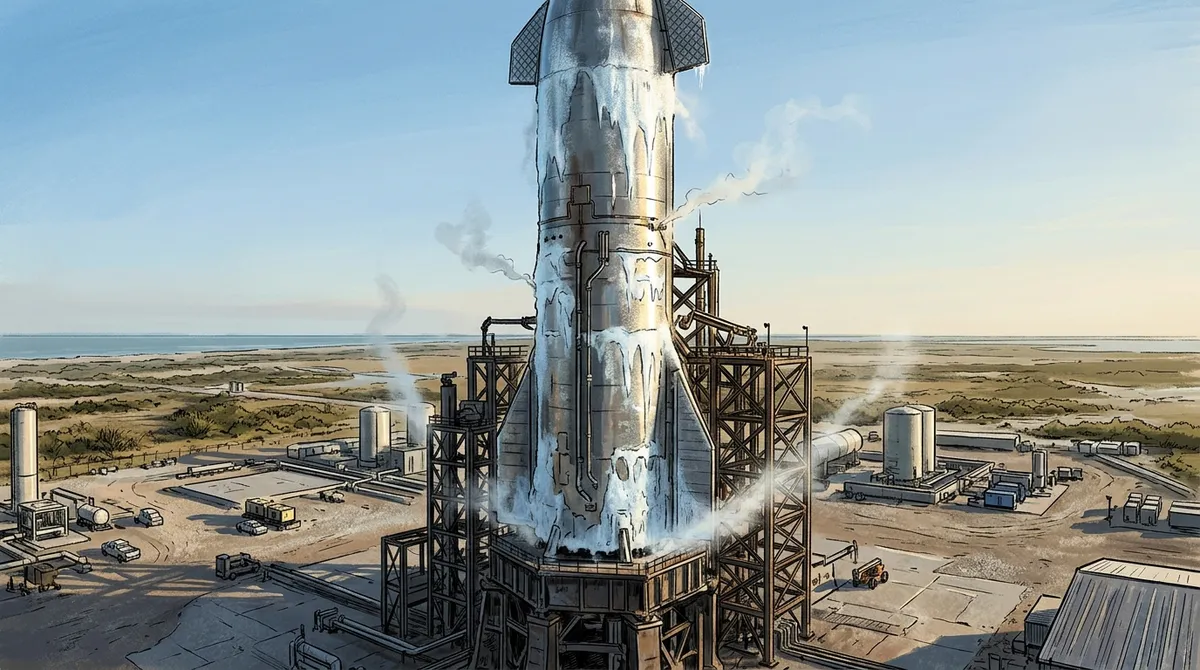
What happened: Super Heavy Booster 24 has completed its first cryogenic proof test at the Massey's test site in Starbase, Texas — a multi-hour run from early afternoon into the night, with frost forming on both the liquid-oxygen and methane tank sections — two days after its probable flight partner, Ship 44, ran its own cryo checks at the same site. The matched Booster 24–Ship 44 pair is the frontrunner stack for Starship Flight 17, which could become the program's first launch from Launch Complex 39A at NASA's Kennedy Space Center in Florida.
What's genuinely new: The booster's cryo proof is done, the concrete next step after the November 13–14 Flight 15, which reached orbit and became the first flight to catch a returning Starship upper stage (Ship 42, after about 22 hours aloft) while its booster's catch was called off after a guidance-system abort. LC-39A's Starship launch tower and a new tank farm were near completion as of early October, with acceptance testing, regulatory sign-off and a static-fire campaign still ahead. SpaceX has not officially confirmed vehicle assignments, a launch date or the launch site for Flight 17, which is expected to deploy another batch of Starlink V3 satellites.
Watch: Static-fire testing next for Booster 24 and Ship 44, a confirmed Flight 17 vehicle assignment and site, and Pad 39A's readiness milestones.
More context: SpaceX is preparing Booster 24 and Ship 44 for Starship Flight 17, a mission NASASpaceflight says could become the program's historic debut from Pad 39A in Florida.
Arianespace holds the Ariane 6 launch of 36 Amazon Leo satellites — retry set for November 24
Sources Entrevue Space.com Arianespace Arianespace, link 2 ESA Transport on X Starlust Arianespace on X published Nov 23, 8:32 AM ET
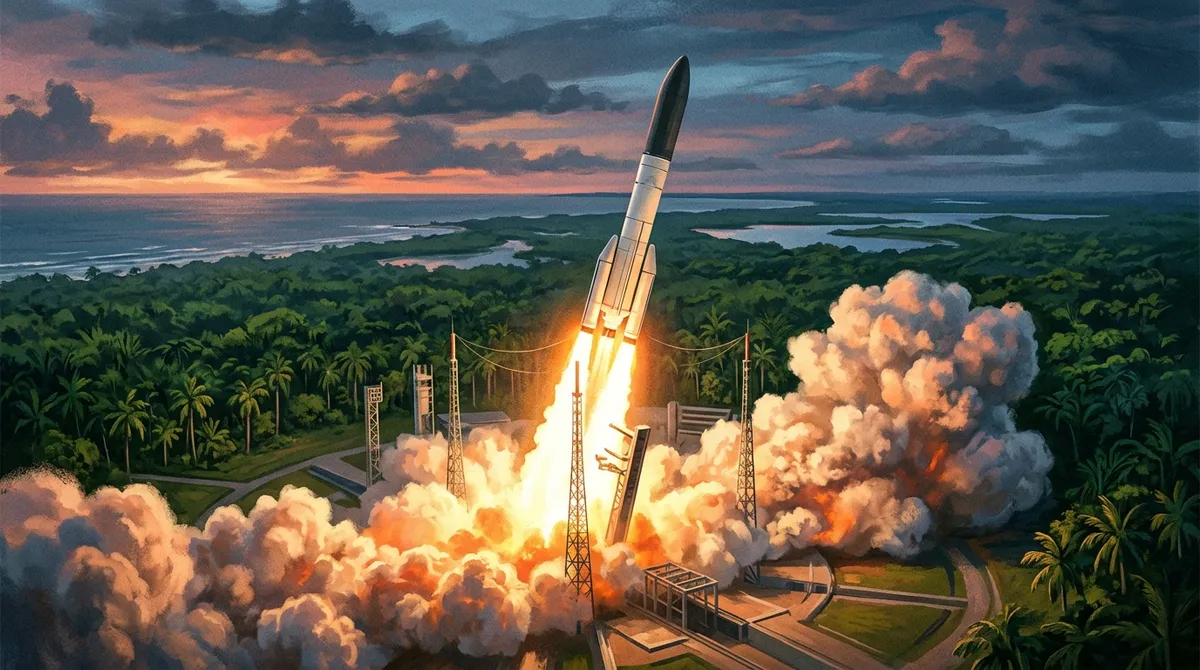
What happened: The countdown for flight VA271 in Kourou, French Guiana was stopped on November 23 before the mobile gantry rolled away because of a technical problem with the launcher's ground support systems; the rocket and its 36 Amazon Leo satellites stayed in stable, safe conditions. Arianespace has since confirmed the restart: teams completed the necessary analyses and checks, and the launch is now scheduled for November 24, 2026, in a 05:45–06:14 a.m. Eastern window (10:45–11:14 UTC), with final separation of the 36 satellites about 2 hours 4 minutes after liftoff.
What's genuinely new: The retry date and window are set — the concrete step past November 23's hold. The flight remains the constellation's first deployment since the November 15 Vulcan failure destroyed 40 satellites minutes after liftoff, and comes with Vulcan grounded during ULA's investigation, New Glenn grounded since its April satellite-delivery failure and May pad explosion, and Falcon 9's rideshare book closing — leaving Ariane 6 to raise Leo's fleet, roughly 400 satellites against a planned 3,200-plus, toward Starlink's 11,000-plus operational spacecraft. The mission would have been Ariane 6's tenth launch and its fourth for Amazon Leo under a 24-launch agreement.
Watch: Whether the November 24 attempt flies and the 36 satellites reach orbit; the Vulcan investigation's findings and return date; whether the launch squeeze pushes Leo toward additional providers.
Rocket Lab expects an Electron price rise as the Falcon 9 order book closes
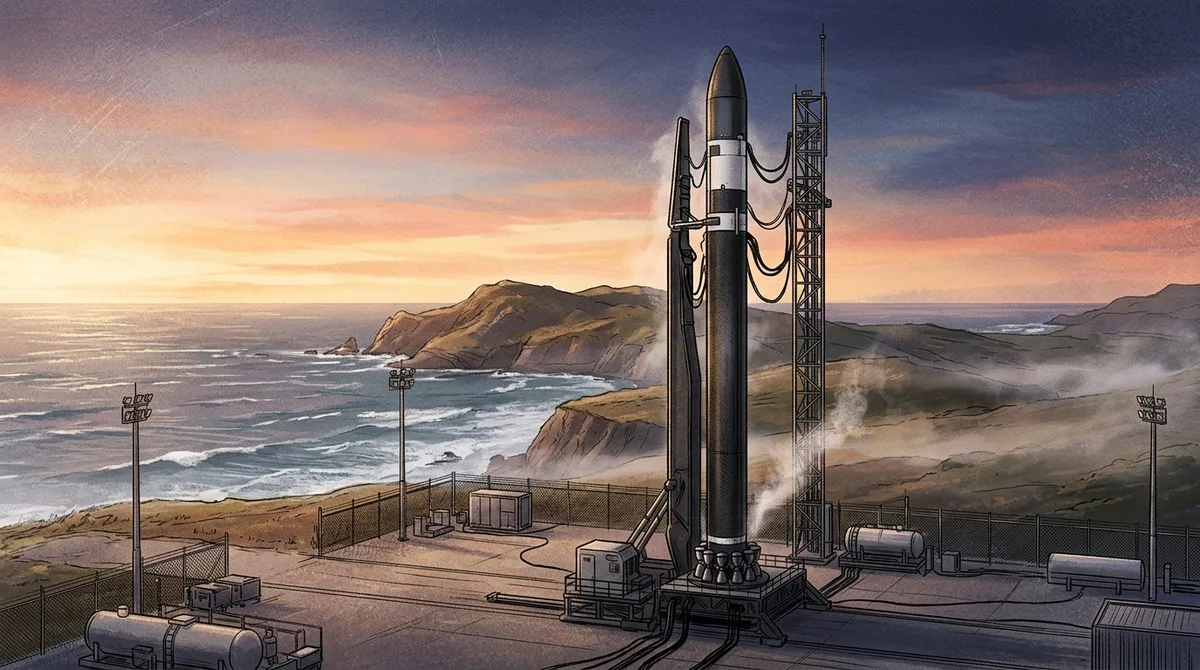
Sources Benzinga The Motley Fool (via The Globe and Mail) Trefis Newsable Asianet News 247wallst published Nov 23, 2:58 AM ET
What happened: Rocket Lab's finance chief Adam Spice, speaking on the Dave G Investing YouTube channel, said satellite operators with nothing booked on SpaceX rideshares for 2029 onward are Electron's next customers, and predicted a "very strong uplift in pricing" that could show up within nine months. The demand case hardened the same day: Synspective ordered 20 additional dedicated Electron launches for 2028–2031, taking its total to 47 Electron missions. The company's shares closed at $50.51, up 7.24%, per Benzinga's market wrap (Benzinga).
What's genuinely new: Synspective's 20-mission follow-on order is the fresh, checkable commitment, part of a record 54 launches Rocket Lab booked across Electron, HASTE and Neutron in the third quarter even as average revenue per launch slipped to $7.8 million from $10.1 million a year earlier. Spice called doubling Electron production "very doable" but named staffing as the bottleneck and estimated about 100 Electrons a year within two years if an expansion is approved; CEO Peter Beck argued Neutron gives Rocket Lab an edge even in a Starship-open market. Neutron has 16 booked missions — more than $515 million of third-quarter contracts, at a price raised 27% to $70 million — but a 2027 debut and a widened net loss.
Watch: whether the Electron price uplift lands and new orders come in while Falcon 9 commercial bookings stay shut; Neutron's 2027 debut against its 16 booked missions.
Brief
-
SpaceX's $44B chip lenders wanted the collateral kept on Earth. The Financial Times reports that investors in "Project Saturn" — the Apollo–Goldman Sachs–led financing priced November 20 at about $44 billion in notes to buy Nvidia Vera Rubin systems for SpaceX — sought a clause keeping the chips securing the debt on Earth, fearing they could not recover and sell the hardware if Musk sent it into orbit and SpaceX defaulted; SpaceX says the Nvidia equipment in the deal goes to data centers on the ground, and the report could not verify whether the restriction made the final documents. More on the lenders' concerns (The Times of India).
-
Fast same-pad Falcon 9 turnaround confirmed at Vandenberg, with Musk's praise. SpaceX launched Falcon 9 and NROL-136 from pad 4E in California on November 22 just 32 hours, 3 minutes and 21 seconds after teams launched USSF-317 from the same pad — its fastest turnaround between launches from the same pad, smashing the prior 45-hour mark, with SpaceX vp Kiko Dontchev naming a 24-hour turn as the next goal; Elon Musk called it a 32-hour launch pad recycle and saluted the team, and the Space Force has moved six national-security missions from the grounded Vulcan to SpaceX (SpaceX on X · TIKR).
-
Starship's fuel bill: Musk projects below $500k a flight with 200-plus-ton payloads. Responding to an estimate of about $1 million to fuel a 100-ton Starship mission, Elon Musk wrote that "propellant cost per flight will drop below $500k and payload will exceed 200 tons" — a projection, not a demonstrated cost — and sketched Starship V4 at about 70 meters with nine Raptor engines and 60%-plus more propellant capacity (TIKR · Tech Times).
-
China's WELIGHT tests heat protection for its all-carbon rocket. The company says quartz-lamp heating of carbon-fiber panels with thermal-protection coating kept backside temperatures under 130 °C, replicating ascent and recovery heat fluxes for the WG-1, planned to launch from the sea (via CNSpaceflight on X).
-
SpaceX will retire the first Starship upper stage its tower ever caught. Ship 42, caught by the Starbase tower after the November 13–14 Flight 15, will be preserved for public display rather than reflown — Elon Musk called it a historic ship and said it "could probably be reflown with a few weeks of refurbishment," but the company won't risk it; the exhibit location is unannounced (Daily Galaxy).
-
Northrop Grumman books a sixth Falcon 9 ride for Cygnus. Ahead of the November 29 NG-25 launch of the Cygnus XL cargo ship on Falcon 9, Northrop Grumman says it has added a sixth Falcon 9 Cygnus mission to a five-flight Falcon 9 tally — implying its own Antares 330 is not yet ready — with vp of civil space Dave Schiller reporting only "meaningful progress" on the vehicle and no updates on the NG-22 repairs from its 2025 transit damage (Ryan Caton on X).
-
Russia's next Progress cargo ship is due to launch on November 24 — a date NASA won't confirm. Roscosmos targets 5:13 a.m. Eastern for Progress MS-36's Soyuz launch to the ISS from Baikonur, with flight schedules showing the liftoff that morning toward a docking at the station's Poisk nadir port (Flight Atlas), but asked during the NG-25 press conference, NASA would only say to reach out to Roscosmos.
-
NASA's ESCAPADE twins sent parting images of Earth. Gold, one of the two Rocket Lab-built Mars orbiters, photographed Earth with its VISIONS camera after completing its powered Earth gravity assist on November 9 as the pair heads for Mars (ESCAPADE on X).
-
Jefferies opens coverage of SpaceX with a Buy and a $210 target. Analyst Sheila Kahyaoglu values the AI/software segment at 68% of the company, projects Starlink revenue reaching $92 billion by 2029 and Starship launches approaching one a day by 2029, with 10.5 gigawatts of computing capacity by 2027; the stock rose 6–7% on the initiation (TipRanks · Yahoo Finance).