SpaceX targets November 13 for the first attempt to catch both Starship stages
From the Space digest for Nov 8, 2026
Sources Starlust SpaceNews SpaceX KRGV WFTV
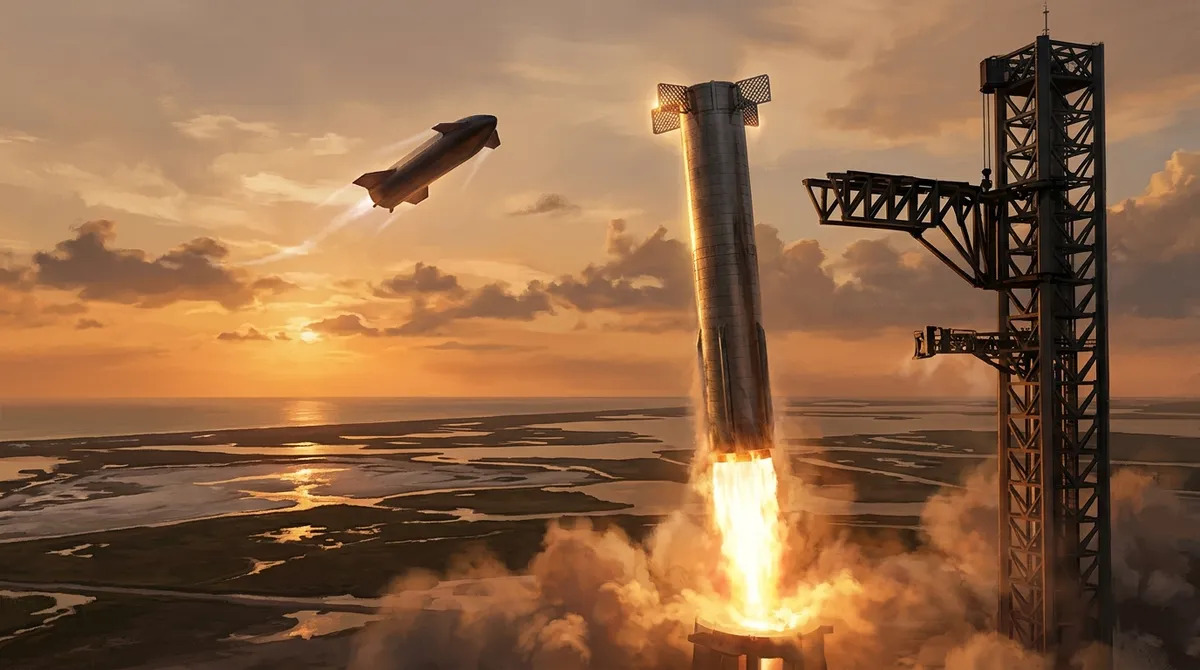
What happened: SpaceX has set November 13 — pending regulatory approval — for Starship's 15th test flight from Starbase, Texas, with a 75-minute window opening at 4:45 p.m., and published the plan for the first attempt to return both stages to the launch site for a tower catch. Ship 42 would orbit about 14 times over roughly 21–22 hours, deploy 26 Starlink V3 satellites (three carrying cameras to scan the heat shield), then fly back over the Rio Grande Valley for a bellyflop and an engine-guided placement between the tower's chopstick arms, with five sea contingency zones and return barred unless the vehicle meets internally developed, FAA-approved conditions (SpaceX). The return trajectory crosses inhabited parts of northern Mexico and southern Texas, banking around Rio Grande Valley cities and out over the Gulf of America before turning south to Starbase, and Cameron County residents may hear one or more sonic booms during both stage returns as Highway 4 and Boca Chica Beach close temporarily (KRGV). The booster making its first return and catch attempt is a Super Heavy V3 — SpaceX previously recovered three V1 boosters, two of which later flew again — and the heatshield carries upgrades born of Flight 14: added tile-retention mechanisms in the highest-risk areas, pathways that previously let plasma behind the tiles sealed shut, and curved tile sections that testing showed cut heating in the narrow gaps during reentry (WFTV). Separately, SpaceX has put the launch-tower catching arms through 30 consecutive tests, and recovered Ship 40 became the first vehicle ever rolled into the Starbase Gigabay.
What's genuinely new: The flight date is now company-confirmed and the full double-catch mission profile — orbit duration, payload, return corridor, abort options and catch criteria — is spelled out, alongside the 30-run arms-testing and Gigabay milestones; follow-up detailing adds the hardware layer — the catch will be the first for a Super Heavy V3 booster, and the post-Flight-14 heatshield upgrades are now spelled out in specifics.
Watch: FAA licensing before the launch, the outcome of both catch attempts, and whether a caught upper stage enables a Starship refly from 2027.